coaching etiketine sahip kayıtlar gösteriliyor. Tüm kayıtları göster

19 Eylül 2025 Cuma

Brutal Truth, Simple Rules: What Toni Nadal Teaches Us About Growth, Development, and Feedback

Last week, I attended the Philip Morris International's Global Travel Retail Conference in Barcelona, where industry leaders and colleagues gathered to share insights on growth, leadership, and transformation. One of the highlights of the event was listening to Toni Nadal, renowned tennis coach and uncle of Rafael Nadal, deliver a keynote speech on the principles that shaped one of the greatest athletes of our time. Toni’s reflections on coaching, improvement, and feedback resonated deeply with me and inspired this blog.

Toni Nadal delivers his keynote at the PMI Global Travel Retail Conference in Barcelona with inspiring videos — on truth, character, and the daily work of improvement


There’s a moment in Toni Nadal’s story that lands like a forehand winner. Minutes before Rafael Nadal plays Roger Federer in Monte‑Carlo, Rafa asks his uncle and coach, “What do you think about today’s match?” Toni doesn’t reach for a motivational line. He tells the truth: Federer’s forehand is better, his backhand is better, his volleys are better. Then he adds the only thing that matters: now we can prepare the strategy to beat him, but we have to know the truth first.

That sentence could be the operating system for growth. In sport and in business, outcomes are noisy and full of variables you don’t control—market shifts, competitors, regulation, the occasional “Djokovic.” Improvement is the one goal you do own. Toni’s philosophy reduces the complex to the essential: tell the truth, choose the price, and train your character. Everything else is commentary.

From strategy to execution, sessions emphasized controllable inputs, candid feedback, and resilience under pressure—principles echoed throughout the keynote.


Make improvement the goal you own

Toni never set “be No. 1” as the real challenge. Rankings and trophies depend on forces outside your control. Improvement does not. In tennis, the fastest path to beating opponents is first to beat yesterday’s version of yourself. In business terms, convert outcome targets into controllable input commitments: quality and frequency of customer interactions, error‑free close percentage, on‑time filings, decision cycle time, scenario rigor. When inputs compound, outcomes follow. For every KPI, write the one behaviour you will do daily that makes it more likely. Track the behaviour, not just the number.


Feedback that builds: truth over comfort


Relentless positivity often feeds self‑deception, not confidence. Growth demands a clear view of weaknesses and the courage to name them. With Rafa, Toni always said the hard thing because clarity is kindness when performance matters. Practical moves: institute a weekly 15‑minute “truth ritual” where each person names one behaviour that helped and one that hurt outcomes, followed immediately by next actions. Pair high standards with high regard. Toughness without care breeds fear; care without standards breeds mediocrity.

Choose the price—and pay it


When a young top‑30 pro asked how to become No. 1, Toni replied: tell me the price you’re willing to pay. Talent sets your starting line; price paid determines your trajectory.

For teams, make the price explicit in projects. Agree in advance what you will trade—comfort, meetings, scope—for what you will gain—speed, quality, customer trust. Put it in writing and revisit weekly.

Strategy requires unblinking realism


The Monte‑Carlo story isn’t negativity; it’s situational awareness. Strategy built on flattery fails at contact. Acknowledge relative strengths honestly, then design a plan that exploits reality. And when the opponent upgrades their backhand, update the plan or lose 6–3, 6–0.

Two tools help: run a premortem (“It’s 12 months later and our initiative failed—what happened?”) and track relative advantages, not just absolute performance.

Win today, plan for tomorrow


After Rafa’s first Roland‑Garros title at 19, Toni wrote a list of everything Rafa didn’t do well. One victory guarantees nothing. Probabilistic humility keeps you hungry.

Use a simple cold list within 24 hours of any big win: three things that worked despite us, and three we must fix before variance bites back. Celebrate and sharpen.

Don’t complicate the essentials


We love data and specialists, but when everything matters, the essentials get crowded out. Toni’s three data points for Rafa were almost childlike: hit the ball as hard as possible; put it where the opponent isn’t; above all, keep it in. The fourth rule tied it together: hit every ball as well as possible every day, not only in finals.

Your version: define three non‑negotiables for your team (for example, close the books clean, challenge assumptions early, communicate decisions the same day). Measure them simply and publicly. Everything else is support, not the show.

Character is trained in the storm


Toni deliberately created friction—bad balls, bad courts, missing water—so Rafa learned to perform under discomfort. Attitude decides matches more often than technique.

Design good friction at work. Run constraint drills with tighter budgets, fewer slides, or smaller teams. Run noise drills by presenting under time pressure or with incomplete information. Practice recovery drills: after a setback, use a two‑minute reset—name the miss, state the next best action, execute. Build resilience with bounded stress; purposeful pressure grows people, chronic unbounded stress breaks them.

Keep brains alert: success ages quickly


When Rafa won Spain’s U‑12, Toni pulled the list of the last 25 champions. Only a handful became stars. The point wasn’t pessimism; it was context. A win today is a maybe tomorrow unless you keep improving. Treat success as information, not identity. Ask: what would have to be true to earn this result again against a better opponent and a tougher market?

Simple rules, big outcomes: keep the ball in, place it where the opponent isn’t, and hit every shot as well as possible—every day

A simple framework you can implement Monday: IMPROVE

I — Identify the controllable. Translate outcomes into daily inputs.
M — Map the truth. One strength and one weakness per person or process.
P — Price the climb. Write what you will trade for progress.
R — Run the plan. Execute against reality, not wishful thinking.
O — Operate with essentials. Three non‑negotiables; everything else supports.
V — Versus yesterday. Benchmark against your last best, weekly.
E — Endure by design. Add safe constraints that build resilience.


How this scales to Finance and Global Travel Retail

Treasury discipline: treat liquidity and FX exposure like “keep the ball in.” Reliability scores more than flash.

Tax and compliance: improvement equals fewer surprises, faster clarifications, tighter documentation. Celebrate zero‑drama closings.

Commercial rhythm: replace vanity metrics with movement metrics such as time to decision, time to customer answer, and time to corrective action.

Culture: adopt the visible pairing of high standards and high regard. Make it explicit that tough feedback is given for the person, not at the person.


Closing Remarks

Toni Nadal’s philosophy is a timely reminder that growth is not about chasing perfection, but about embracing the honest, sometimes uncomfortable, process of improvement. Whether on the tennis court or in the boardroom, the fundamentals remain the same: tell the truth, focus on what you can control, and build resilience through adversity.

As leaders and teams, our challenge is to create environments where feedback is valued, standards are high, and every success is treated as a stepping stone rather than a finish line. By simplifying the complex and prioritising character over comfort, we set ourselves—and those we lead—on a path to sustainable excellence.

Let’s take these lessons forward, not just as inspiration, but as a practical framework for how we work, lead, and grow together. What is your version of hitting the ball as well as possible, every day?


Bonus: If you want to dig into the other key take-aways from the PMI GTR's Global Conference in Barcelona, you should read thisVolkan Yorulmaz: Unlearning, Multiplying, and Growing: Leadership Lessons from PMI’s Global Travel Retail Conference

13 Nisan 2025 Pazar

Behind the "Fantastic Job": Progress Bars and Punching Bags

Dear Father,

First of all, it's great to have the chance to dedicate some quality time to writing this letter, just one week after the previous one. It's early Sunday morning, and for the second day in a row, I've slept more than seven hours—finally recovering from the fatigue of sleeping only five to six hours each night over the past week.

It’s been a week of “getting used to it.” After the disappointment of last week, I had scheduled meetings from Monday to Thursday, where I had to present various assessments. This required me to simplify tables, check with consultants, update the files, present them to stakeholders, record and archive the sessions, and document the meeting notes. After each session, I felt like a progress bar in my mind moved a little further. Completing all sessions—especially Thursday’s—without any issues was the main objective of the week. Thank God, I managed to do that.

But it wasn’t over. On Thursday afternoon, our finance director rightfully asked for a status update on the first batch by Friday. I had planned to complete many quarter-end, statutory, and ad-hoc tasks by Friday, but I had to reschedule them. I managed that too—and thankfully, I heard the words “fantastic job” as feedback.

Yesterday, I told my aunt about this appreciation, and she asked me what it meant. Clearly, “fantastic job” doesn’t hold the same recognition value in Turkish for someone in their seventies. It reminded me of my days in Romania, when I was a guest auditor—back then, it was the first time I heard “fantastic” as praise.

When I finally stepped away from my laptop on Friday evening, I had nearly ten emails I’d already read but marked as unread to revisit. Still, I had to head to the shopping mall where my son watched “A Minecraft Movie” for the second time since its release. I kept repeating to myself: “Oh my God, thank you, it’s over.”

It was a heavy week, and thankfully I won’t be in presentation mode in my upcoming meetings. That, in itself, is something I’m grateful for. I know next week won’t be light either—statutory closings, treasury activities, and ad-hoc requests will keep me busy. But, as they say, “this is the way.”

Aside from work updates, this week also marked the end of my three-month coaching journey. At the end of December 2024, our function offered me an external coaching program in recognition of my efforts in an initiative. My coach, based in Switzerland, had spent his entire career in multinational companies. One day, he lost his job and began this new path.

Whatever I shared with him about my work and interactions made complete sense to him—he had lived similar experiences. On top of that, his technical knowledge enriched our sessions, making the three months fulfilling.

In our final session last week, he left me with some warnings. When we began, I took a “saboteur assessment,” and my top saboteur was being a Pleaser. Let me share the definition:

“The Pleaser has a strong need to be liked by people and attempts to earn it by helping, pleasing, rescuing, or flattering them. The Pleaser needs frequent reassurance from others about their acceptance and affection and can’t express needs openly and directly. Instead, the Pleaser expresses needs indirectly by making people feel obligated to reciprocate care.”

You can read more or take the test here: https://www.positiveintelligence.com/blog/pleaser-saboteur/

Michael, my coach, ended the session by warning me that working so hard to please others could eventually lead to burnout—waking up one day with no motivation toward work or to-dos. This has stuck with me, and I’m doing my best to find balance. That’s partly why I’m taking the time to write. And surely, I need to make time for my daily walks and workouts when I go to the office.


Let me briefly talk about exercising. Yesterday, a rainy Saturday, I dropped my son off at his special school and then went to the office to use the gym. Normally, I prefer cardio and avoid weights. But after checking my weight and realizing I’ve gained a bit since Ramadan, I started with elliptical walking. After 30 minutes, I noticed the sandbag and boxing gloves. I geared up and started kicking the sandbag, thinking of all the emails I’d been tagged in—not about the people, but the extra tasks and requests I didn’t say no to, trying to please others.

It’s not usually my style, but it was exactly what I needed. When I removed the gloves, my hands were red. I found a disinfectant spray and applied it to the sore areas—it reminded me of the pandemic days…

Now, I hear my son and wife have woken up. That’s my cue to say goodbye—until next time.

Best wishes,
Volkan

PS. This letter is written to my "father," and there is a metaphor here; he knows himself.

13 Şubat 2022 Pazar

Getting a Coaching on “Self-Doubt in Career” from Melissa Whiting

Recently I saw Melissa Whiting’s post in Linkedin, she was stating that there was a limited number of coaching places available to work with her. This coaching opportunity was for those who feel self-doubt is holding them back in their career, creativity, life or relationships. Melissa Whiting worked in Philip Morris International for more than 20 years and she was Vice President, Inclusion & Diversity (from Jan 2017 to Oct 2021) in her last assignment. Now she is a leadership, career and life coach, mentor, and gender equity & inclusion consultant. Upon seeing her post about coaching, I sent her a direct message and asked her availability. I was lucky and she accepted me.

This post by Melissa Whiting started the fire

Why did I ask for Coaching?

As Melissa mentioned in her post, the target group for this coaching offer was people who think that self-doubt is holding them back in their career. Am I one of those people? Maybe not a hundred percent but somehow yes. This is something related with my ambition towards a global role with wider responsibility outside of my country Turkey. Until now, I had the chance to work in global companies: PwC, General Motors and Philip Morris. When I was making a move to Philip Morris in 2013, I was expecting to have an international job opportunity, short term assignment (STA) or long term assignment (LTA). Unfortunately things did not go in line with my expectations since my experience was mainly based on statutory tax legislation in Turkey. Then I worked hard to learn more about transfer pricing, independent audit and financial reporting standards which will make me a candidate for positions in HQ which is located in Switzerland. I had dreams that my son would grow in a foreign company, learn foreign language (hopefully English) in childhood and we would have social network in which we could experience new cultures. While I was focused on my growth and making myself ready for the opportunities, the company’s strategy changed and the number of STA/LTA openings decreased. Despite this fall, there were still some opportunities and they were open in internal job postings site.

I know the direction I want to go but I can't go to that direction

I set up a reminder in 2016 and this was reminding me to check the job postings every Friday at 9:00 am. At first, I was only applying to Finance roles. Since there was no positive turn back to my applications, I enlarged the criteria while making applications, this time I did not limit myself with only Finance but also External Affairs and Global Communications roles in Europe. I stated my interest in yearly performance forms and meetings, but I even could not have an interview opportunity.

During this period, I got grades, moved to a different city and started to work with great people. I am on my own individual career journey, I am happy with what I have got but my interest in a global role in a foreign country is always a challenge for me that I want to experience. I am happy in my company PMI, and I find a meaning in it during the transformation journey of my company towards unsmoking the world. On the other hand, as I could not receive a call for an interview in the jobs I applied, this created a self doubt in my career. I was not receiving proper feedback after my applications, there was only generic mails so I invested more in myself. This situation led me to life-long-learning mentality. I spent more time for learning, receiving certifications, completing training programs. In order to increase my visibility, I shared more in social media, created blogs, youtube channel to show my progress, shared them in intranet site of my company but it did not work out. I changed the format of my CV, even got a training on CV update, added keywords, created job specific intention letters. Unfortunately, result did not change. Then I found myself caught up in comparison and judgment.  I have developed beliefs which were developed over time through the combination of my experiences, messages from others and societal and cultural conditioning. I even thought that being a non-EU citizen is a barrier for me (like additional workload to get work permit, etc.) which prevents me to reach the opportunities abroad. All these made me lose my confidence in myself. This was my main driver while I was asking Melissa for coaching. 

I believe in PMI's smoke-free future vision and I work towards it

What Melissa Made me to Discover

On the day of our coaching session, I was extremely excited. As I am not used to one-to-one meetings with VPs, the meeting made me feel “excitement”. I shared this feeling with Melissa in the opening of the call and she told that she was no more a VP to make me calm. I told her about my ambition, my efforts towards reaching my ambition and how it made me feel after all these applications. I called my current mood as “self-doubt in career”. This was not a doubt in my current role but a doubt in the way towards my dream job. I know that coaching starts with a goal and my goal was having confidence in myself within my career journey so that I can have a global role in a foreign country.

Melissa asked me some key questions to gain clarity about my goal. Within the coaching session and after that session, I am thinking about my answers to these questions. The main questions are:

  • Why is this goal important for me?
  • What can I control for achieving my goal?
  • How can I still grow without thinking about my goal?

These are all great questions that made me think deep. During the coaching session, the most powerful recommendation was accepting that I can’t control what the company decides. I recently read from an article in Forbes stating that “We often want to control our environment. Or we may want control over the outcome of every situation. But the more you try to control everything around you, the more anxious you’ll feel.“ (2 Psychological Tricks That Will Help You Stop Worrying About Things You Can’t Control (forbes.com)) The main message of that article was “when you stop worrying about things you can’t control, you’ll have more time and energy to devote to the things you do have control over. And this can be key to reaching your greatest potential.” Now this makes much more sense and I concentrate more on my growth mindset, preparing to be fit when the opportunity comes, and keep looking forward the best opportunities to make my dream come true.

What is Next?

I have a son and I work hard to provide him the best options within my standards. Working abroad will not only be a challenge for me to develop my skills but also open the way for my son’s foreign language learning and become a world citizen. I will go on imagining what will be different in my life when I am assigned to my dream job.

I asked Melissa about her experiences when she was in roles outside of her own country. She told me that these assignments in abroad made her understand differences, see diversity, be humble and curious, listen and learn from other people and gain satisfaction from various experiences. In short, these are also what I look for, therefore hearing her experiences once again let me understand that my expectations are in line with her real time experiences.

Being connected to our dreams is one of the best ways we have to find a connection to our deeper, wiser selves. Therefore, I write in bold that I have an ambition to work abroad for my company PMI with my family, overcome the challenges with a growth mindset, be a life long learner in this journey and enjoy the career path with my family. This time, I am not only telling my dream to my manager or writing it down to my performance form but stating it to the whole world who will somehow read this content.

Thank to Melissa for providing me this coaching opportunity, she made me ask the right questions, think about the answers and re-invent my motivation towards my ambition.

An Awesome Coaching Session - Thanks to Melissa


6 Kasım 2015 Cuma

Kendine Koçluk Yap

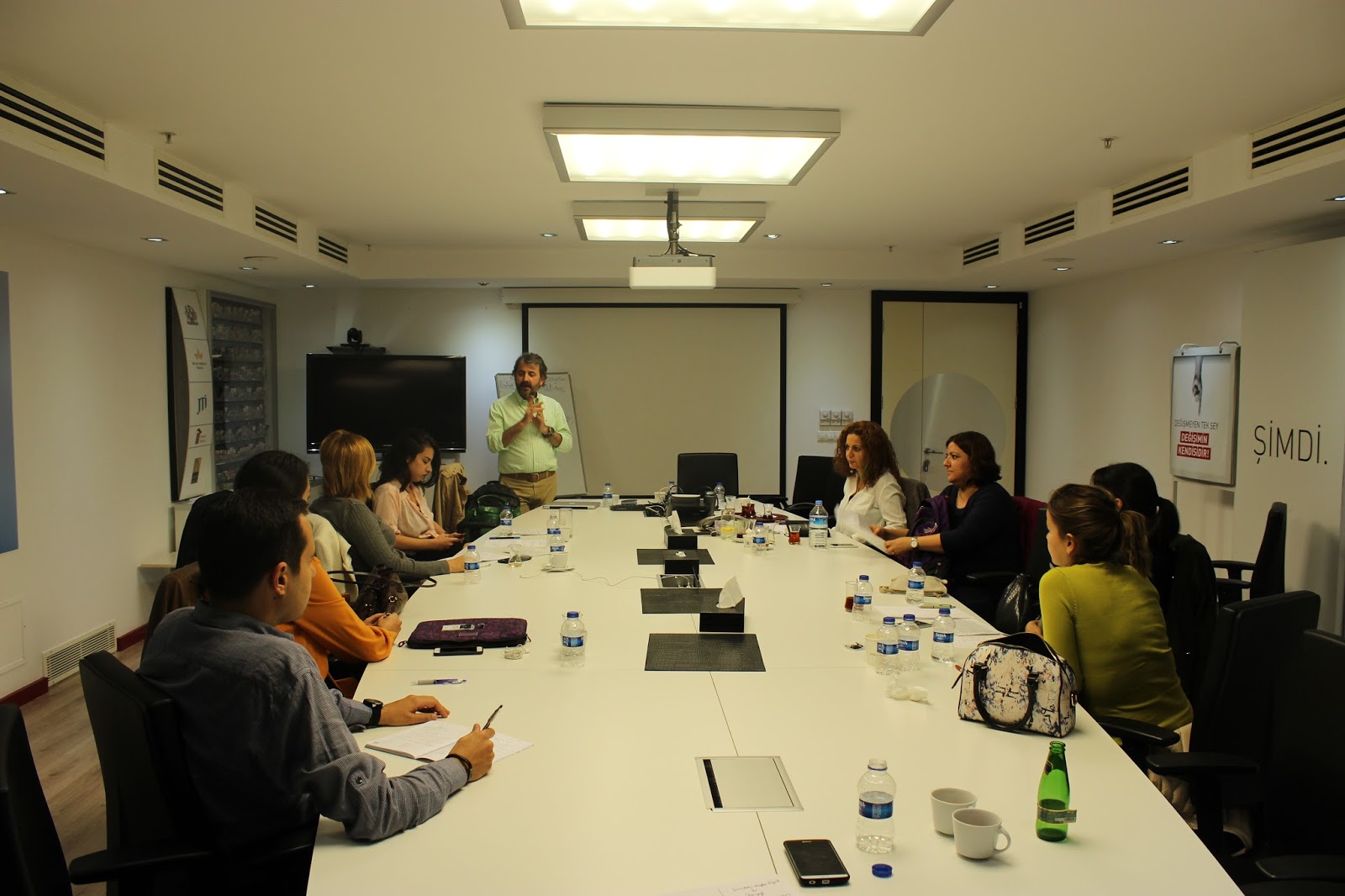
Philsa Philip Morris Kişisel Gelişim Kulübü (Karma) olarak Etkin İnsan Gelişim Enstitüsü’nden İsmail Barış Özpazarcık hocamızdan 2 ve 4 Kasım 2015 tarihlerinde üçer saatlik iki seans halinde “Kendine Koçluk Yap” eğitimini aldık.

Öncelikle koçluğu, insanları bir yerden bir yere taşıma, yol arkadaşlığı olarak tanımlayarak eğitime başladık. Sonrasında da çizgi üstü iletişi ve çizgi altı iletişim konularını inceledik. İletişimin bu iki tipinin özelliklerini aşağıda bulabilirsiniz.


Kişi kendine koçluk yaparken “AKUT Soru Sor” yöntemi ile kendini daha iyi tanıyabilir ve odaklanacağı noktayı da daha iyi anlar. Bu yöntemde sorulacak sorular şöyledir:
  • Bu duruma dışarıdan bakınca ne görüyorum?
  • Bu durum senin kontrolünde mi?
  • Kontrolünde olan neleri yapabilirsin?
  • Şu anda seçeneklerin neler?
Hem kendine koçluk yaparken hem de yukarıda bahsettiğim AKUT soru yönteminde “Güçlü Soru Sor”manın önemini görüyoruz. Peki koçlukta soru sormanın faydaları nelerdir?
  • Beyinde güçlü bağlantılar kurdurur.
  • Çözüme odaklar.
  • Düşündürür, evrensel doğruları buldurur.
  • Hayal gücünü ateşler.
  • Aklı doğru kullandırır.
  • Kontrolü ele aldırır.
  • Eyleme geçirir.
  • İçsel bilgeyle buluşturur.
Her insan tam ve bütündür. İnsan, doğru soruları bulursa kendi doğru yolunu bulur. Bu noktada insan kendine şu soruyu sormalıdır: Yaşam yolu bana aitse nasıl kendi yaşam pusulamı bulabilirim?

Güçlü soru sormaktan sonra “Dikkatini Ver”mek üzerine konuştuk. Dikkatimizin nereye odaklı olduğunu bulmak ve üzerinde yoğunlaşacağımız/çalışacağımız/geliştireceğimiz konu üzerine dikkatimizi odaklamanın koçlukta etkin sonuç vereceğini öğrendik.

Ardından bir başka konuya, “Deneyimlerle Kendini Güncelle” alanına geçtik. Burada yine deneyimlerimiz hakkında bazı sorular sorarak yol aldık. Bu sorular:
  • Senin için ne demek?
  • Senin için anlamı ne?
  • Neleri farkettin?
  • Keşfettiğin ne oldu?
  • Yaşadığın bu durum sana ne öğretti?
  • Aynı durumu bir kez daha deneyimleseydin nasıl davranırdın?
“Deneyimlerle Kendini Güncelle” aşamasından sonra “Ajandanı Güncelle” boyutuna geçtik. Burada kendine koçluk yapan kişi yine sorularla yol alır. İşte o sorular:
  • Önceliklerim neler? (günün öncelikleri / haftanın öncelikleri)
  • Esnek plana sahip miyim?
  • Motivasyon sağlayıcı etkinlikler (enerji yükselten) ajandanda yer alıyor mu?
  • Kendine zaman ayırıyor musun?
  • 24 saat nitelikli zaman, nitelikli paylaşım için neler yapabilirsin?
Birinci günkü eğitimin sonunda ise kendimize koçluk yapma üzerine her bir katılımcı aşağıdaki soru piramidini kullanarak çalışma yapma fırsatı buldu.
Eğitimin ikinci gününe mantıksal algı boyutlarını inceleyerek başladık.

Algı boyutlarını çalışırken Barış hocamız Einstein’ın bir sözünü bizimle paylaştı: “Mevcut sorunlar aynı düzlemden bakılarak çözülemez.” İşte bu yüzden koçlukta sorunlarımıza yoğunlaşırken hep bir üst boyuta çıkmak gerekir. Bu noktada bir Çin atasözü bizler için ilham verici niteliktedir: “Bir fotoğraf bin sözcüğe bedeldir.”
Eğitimde bana en yakın gelen noktalardan biri ise yazarak koçluğun çok etkili olduğunun belirtilmesi oldu. Genelde yazmanın o konuya inanç ve motivasyonumu artırdığımı ben de önceden deneyimlemiştim. Barış Hoca, özellikle sağ elini kullananların sol elini, sol elini kullananların sağ elini kullanarak yazmasının alışık olduğumuz düşünme yöntemini geliştirdiğini ifade etti.
“Her fikir bir projedir” şeklinde hayata bakılan koçluk sisteminde “Kendine Koçluk Yap” eğitimi bana sistematik bir bakış açısıyla sorular sorup olayları bir üst boyuttan değerlendirebilmem açısından faydalı oldu. Artık bunu hayatımda sık sık deneyimleyerek kazanan ve gelişen olma vakti!


Google adsense

Analytics