Future of Work etiketine sahip kayıtlar gösteriliyor. Tüm kayıtları göster

23 Ağustos 2026 Pazar

AI Can Generate the Slides. We Still Need to Generate the Insight

AI can create a polished PowerPoint presentation in minutes.

But can it explain the reasoning behind every recommendation on the slide?

That question changed the way I think about using Copilot.

This Sunday, I was reflecting on one of the goals in my Individual Development Plan: becoming a stronger stakeholder and contributing to better decisions, not just better outputs.

While thinking about that, I came across an article by Paul Millerd, How to use AI in knowledge work and consulting work without shipping slop.

What I expected was another article about prompting techniques and productivity.

What I got instead was a challenge to the way I use AI.

Like many of us, I use Copilot regularly, especially in PowerPoint. It helps me structure ideas, summarize information, build storylines, and create first drafts much faster than before.

And honestly, I often look at the result and think:

"That's pretty good."

But one example from the article made me pause.

Millerd asked an AI model to create a slide about U.S. real estate trends. The first result looked impressive: charts, headlines, and a convincing storyline. At first glance, it looked ready for an executive presentation.

Then he started asking simple questions:
  • What exactly do we mean by "rebound"?
  • Do the data actually support the headline?
  • Is the title aligned with the evidence?
  • What's the real takeaway?
  • Why should an executive care?
With each round of questioning, the slide improved. The insight became sharper. The story became clearer.

The lesson was simple: the first draft looked finished, but the thinking wasn't.

One point from the article stayed with me:

AI lowers the cost of producing work, but increases the value of judgment, understanding, and synthesis.

That example felt very familiar.


How often do we stop at the first polished output because it looks convincing?

How often do we confuse a well-designed slide with a well-developed idea?

The more I reflected on it, the more I realized that I sometimes use Copilot as a content generator when I should be using it as a thinking partner.

Not to tell me what to think.

But to challenge my thinking.

Instead of asking:

"Create a slide for me."

Maybe the better questions are:

"What assumptions am I making?"

"What am I missing?"

"How would a skeptical stakeholder challenge this?"

"Would I feel comfortable defending this conclusion in front of my leadership team?"


That's where the real value starts.

Because as AI becomes better at producing content, our value shifts from creating slides to creating clarity.

From generating answers to asking better questions.

From presenting information to generating insight.

My biggest takeaway from this Sunday reflection:

The first AI output should be the start of the conversation, not the end of the thinking.


Key Takeaways

  • AI can generate content, but humans still need to generate insight.
  • A polished presentation is not the same as a well-developed recommendation.
  • The value of knowledge workers is shifting from content creation to judgment and synthesis.
  • Copilot works best as a thinking partner, not just a content generator.
  • Better questions often create more value than faster answers.


Final Thought


The most important skill in the age of AI may not be prompting.

It may be judgment.

As tools like Microsoft Copilot become better at generating content, the competitive advantage of knowledge workers will increasingly come from framing problems, challenging assumptions, and turning information into actionable insights.

AI can create the presentation.

People still need to create the understanding.


📖 Inspired by Paul Millerd's article: How to use AI in knowledge work and consulting work without shipping slop
https://strategyu.co/using-ai-in-knowledge-work-and-consulting/

Has AI mainly changed the way you work, or has it also changed the way you think?

#AI #Copilot #KnowledgeWork #StrategicThinking #Learning #FutureOfWork  

22 Temmuz 2026 Çarşamba

The Best Way to Survive AI: Leadership Lessons from My Summer Vacation

My phone has been buzzing with notifications recently. Thank you to everyone who sent messages celebrating my 13 years at PMI!

Being on vacation during this milestone gave me a chance to step back. I am almost completely disconnected from the daily corporate rush. When the noise fades, you finally have the mental space to think about the bigger picture and future growth plans.

During my morning walks by the sea, I’ve been listening to podcasts about Artificial Intelligence and its impact on us - white collar professionals. The fear is everywhere: What happens when machines can do our jobs faster?

An early morning walk with podcasts on AI

The best answer didn’t come from a tech or HR expert. It came from two local business owners I met here in Marmaris.

Before I tell you what they did, you need to know how I found them. I didn’t use a search engine. I hired our boat captain because the hotel insisted. I drove to a restaurant in Söğüt because a neighbor told me I simply had to go. That is the payoff of real leadership. When you lead well, your customers do your marketing for you.

The Captain Who Helped a Rival

Our boat captain in Selimiye was flawless. The wind was heavy, but he docked our boat smoothly on the first try. The boat right behind us, however, was struggling. They tried and failed multiple times.

Time to have nice memories with my son in the boat

An algorithm only cares about its own success. It finishes its task and stops.

Our captain didn't do that. He stood up, shouted directions over the wind, and patiently guided his competitor until they were safely docked, too. As we left, the rival crew yelled their thanks across the water. He didn’t just steer a boat; he helped a rival succeed.

Family comes first, and vacation period is the best time for quality time with family

The Welcome Before the Menu

A few days later, we drove to that highly recommended restaurant in Söğüt. Before I even turned off the engine in the parking lot, a woman walked up to our car with a huge, warm smile.

It was Yasemin, the manager who also named the restaurant. She didn't wait for us to walk inside. She saw we were new, welcomed us right at the car, and personally guided us down a narrow path to the water.

Software can take a dinner reservation in one second. It can send automated reminders. But it cannot walk up to your car and make you feel valued before you even sit down.

The Un-Automatable Growth Strategy

After 13 years in Philip Morris International (in addition to 3 years at PwC and another 3 years at General Motors), I know how much we focus on efficiency and automation. They are important. But efficiency is not a legacy.

If your business model relies entirely on doing tasks faster, AI will eventually catch up. But if your growth relies on empathy, building deep trust, and showing genuine care to competitors and customers, you are irreplaceable.

You cannot automate a good reputation. We don't need to act more like machines to survive the future. We just need to be more human.

20 Mart 2026 Cuma

Growing Together with my Interns

They were my interns.

Or maybe the better word is: my project partners.

Over the past two weeks, they came to the office to visit me, and we ended up sitting at the same cafeteria table with the same relaxed conversations. Nothing formal - just genuine connection.


But after I sat there with them, it was my personal reflection time.

Most of our work together happened through screens - Teams calls, shared screens, digital problem‑solving. Seeing them in person reminded me how much they’ve shaped my own journey in these past two years as well.

Not just with the work they delivered.

But with the way they helped me grow.

Arda: Building Our Digital Hub (Summer 2024)

Arda was the one who helped us turn digital chaos into something organized and useful.

He built our Finance SharePoint hub from scratch - bringing order to scattered files, links, and documents. The system he created is still the place the whole team relies on.

He also helped us fight against the parked‑invoice issues and made our follow‑ups clearer and more structured.

But what impressed me most was his attitude:

  • curious
  • open
  • willing to try without fear

Working with him pushed me to look at my own digital habits. I realized how easy it is to fall into routines - and how refreshing it is when someone younger shows you a simpler, better way.

Emre: Bringing the Spark of Automation and AI (2025–2026)

A year later, Emre joined with a different kind of energy - one driven by automation and AI.

He built the first version of our Tax Intelligence Monitor, created Python scripts that automated websearches, and explored new AI tools with zero hesitation.

Our conversations often became small learning exchanges.

Sometimes he taught me something new.

Sometimes I shared context from tax, treasury or something what we call soft-skill.

But the bigger lesson was this:

Staying up-to-date is not a one‑time task.

It’s a habit. A muscle. A mindset.

Why These Moments Matter

We talk about simplification and digital transformation as if it’s only about systems, dashboards, or technology.

But it really starts with people.

With fresh eyes. With honest questions. With energy that makes you rethink your “normal.”

Arda and Emre delivered great work.

But they also gave me something just as valuable:

I didn’t only share my know‑how with them, I learned from them too.

Their reverse mentoring - intentional or not - helped me stay up‑to‑date, stay open, and stay curious. They reminded me that progress doesn’t always come from big projects. Sometimes it comes from a simple conversation at the cafeteria table.

And for that, I’m grateful.

30 Kasım 2025 Pazar

A Story of Trust and AI: Betting on Potential

Today marks my 750th blog post in 18 years. Over the years, I’ve written about finance, fatherhood, and my highlights from the books. But milestone #750 feels different. It isn’t just about sharing a thought; it’s about sharing a moment where I watched the future of work happen right in front of me.

Last Monday, I presented to hundreds of colleagues during the AI & Automation: Real Stories & Real Impact Webcast. But the true driver of that day wasn't just code or digital tools—it was trust.

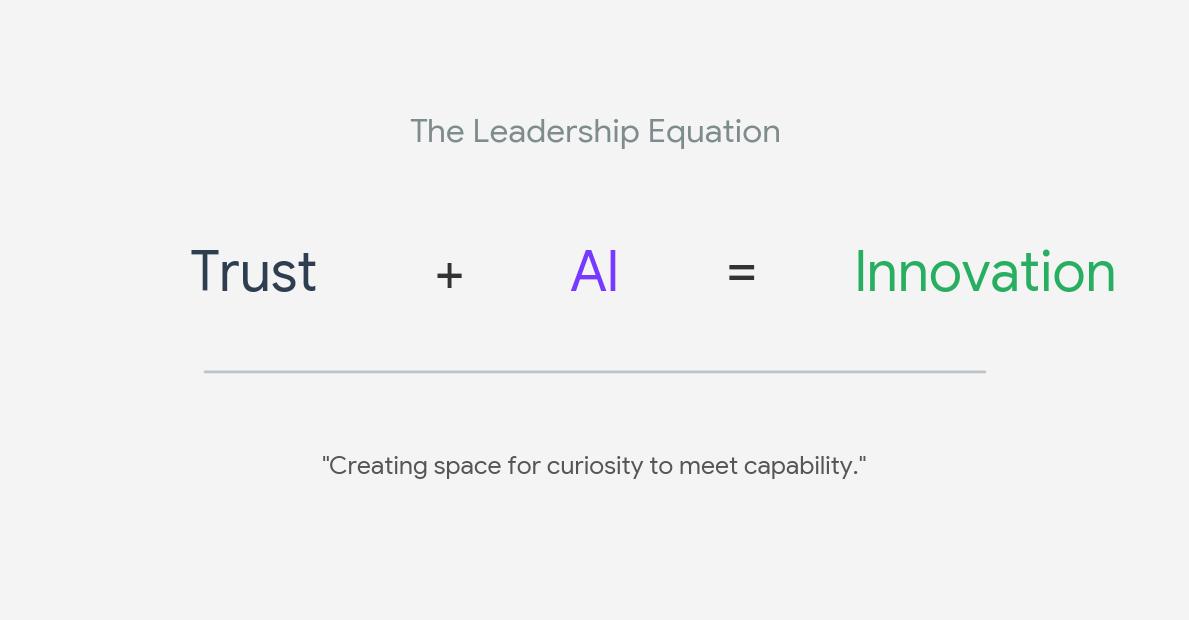
I want to take you behind the scenes of that day—not just to share the technical win, but to share a personal story of what happens when you combine Trust + AI.


Grounding Before the Growth

To be a leader who "creates space" for others, you first have to create space for yourself. My day didn't start with last-minute slide edits. It started early, in the quiet of the mosque. I went there to pray, to center myself, and to find focus. Innovation requires a clear mind, and that moment of stillness gave me the grounding I needed to support my team later in the day.


The Virtual Motivation 

By the time I reached the office for our rehearsal, I wasn't manic; I was ready. I hopped on a Microsoft Teams call with my co-speaker and intern, Osman Emre Yucel. Even though we were connecting through screens, the energy was high. I only told him: "We will do it!" 

Ready, Set, Go! - We will do it!

The Equation: Curiosity + Copilot > Experience 

We were there to present TIM (Tax Intelligence Monitor), a tool we built internally to automate the tracking of tax regulations. But the real story wasn't the tool; it was the method.

When Emre joined the team, I could have relied on my years of experience and micro-managed every step. Instead, I chose Trust. I defined the "what" (the tax complexity we faced with new product categories), but I gave him the space to own the "how."

This is where AI bridged the gap. I had the experience, but I was stuck in the old ways of working. Emre had the curiosity and tools like Microsoft Copilot. When you combine a leader’s trust with an intern’s AI-empowered curiosity, the hierarchy dissolves. The intern becomes the innovator.

Real Innovation is Messy (And Funny) 

Moving "beyond the hype" means admitting that AI isn't magic; it's an iterative process. During the webcast—which we delivered twice via MS Teams, once for the East and once for the West—we shared our "Fail Smart" moment.

I showed the audience how, in the early days, our AI tool kept flagging betting sites instead of tax regulations! We didn't hide this. We laughed about it. That transparency showed the audience that innovation is accessible. You don't need to be perfect; you just need to be persistent.


The Ripple Effect 

The most powerful moment wasn't our presentation; it was the interaction that followed in the chat. The questions and comments poured in. By the end of the day, we realized we hadn't just showcased a tax tool. We had handed over a blueprint.

We explained via the Q&A that the logic Emre built is a flexible asset. By simply adjusting the search parameters, a colleague in Supply Chain or Commercial can turn TIM into their own "Competitor Monitor" or "Regulatory Alert System."

That is the ultimate result of the Trust + AI equation: We didn't just build a solution for ourselves; we inspired a way of working that others can make their own.

Here is to the next 750 posts—and the innovations they will bring.

P.S. Remember how I said we started by accidentally tracking betting sites? Well, look at us now! I’m incredibly proud to share that TIM has officially been recognized and rewarded as a Continuous Improvement project. From "Fail Smart" to "Award Winner"—not bad for a tool built by an intern, right? 


Being Recognized - this means a lot!

Best invite of 2025


Google adsense

Analytics